

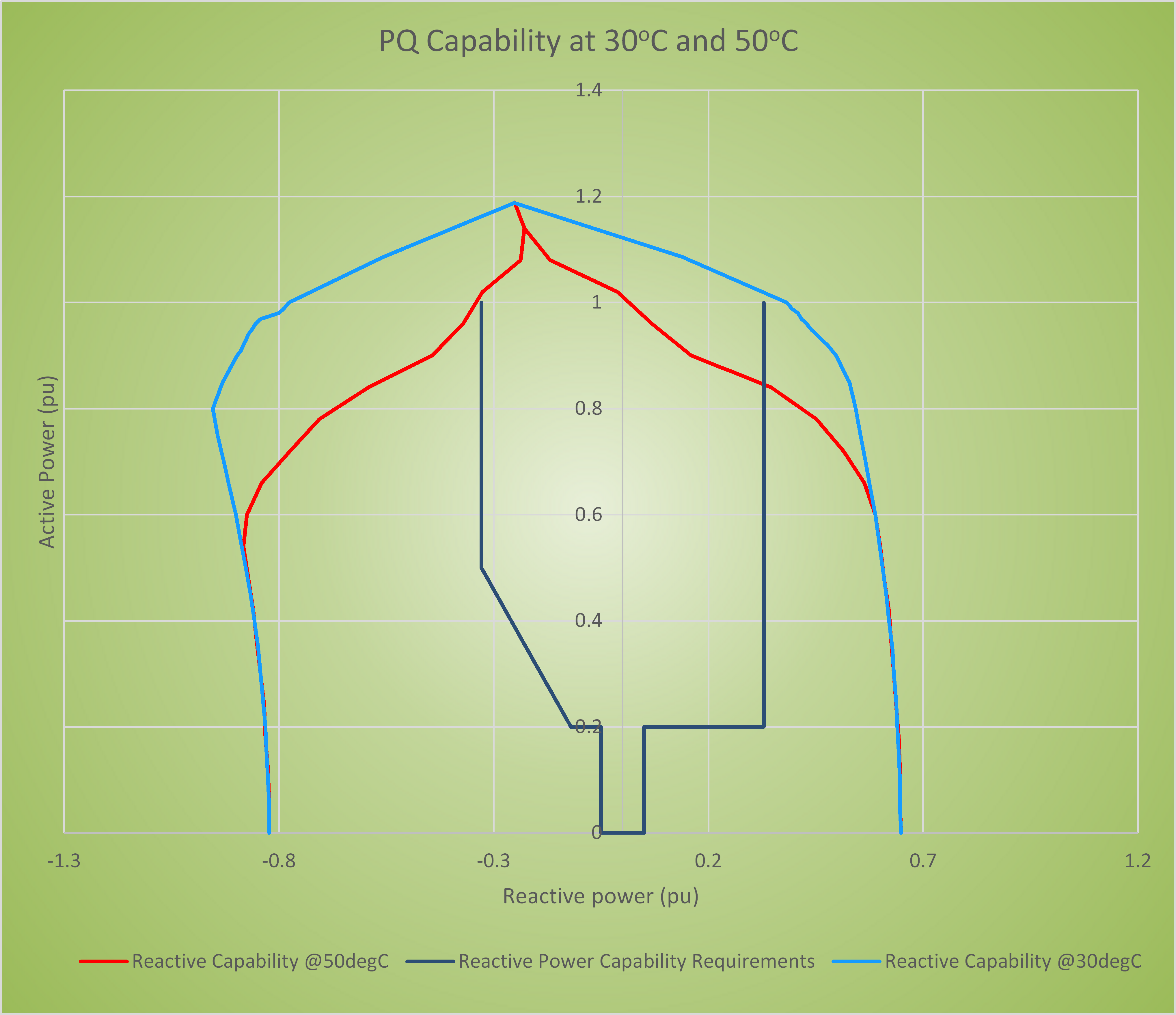
In many projects, reactive power capability is assessed primarily against the grid code requirement at the connection point, with the focus naturally placed on demonstrating compliance. However, what is sometimes underestimated during early project development is how strongly ambient temperature can influence the actual capability available from the plant. A recent G99 reactive power capability assessment highlighted that ambient temperature is not simply a background assumption. It can have a direct impact on both the reactive power capability of the inverters and the thermal rating of key plant equipment, particularly inverter transformers.
This is important because reactive power capability is not determined by one item of equipment in isolation. It depends on how the overall plant performs as a system, including the inverter capability, transformer thermal rating, internal network losses, voltage profile, and the margin available within the design. Where temperature has not been considered properly, a site may appear to have sufficient reactive capability on paper, but in practice the available headroom can reduce under more onerous operating conditions.