
Technical Note

Why Temperature Matters in G99 Reactive Power Capability Studies

Ambient temperature can materially change inverter reactive capability, transformer thermal rating, and the practical headroom available at the connection point during G99 compliance studies.

G99 compliance Reactive power capability Plant thermal limitations Power quality
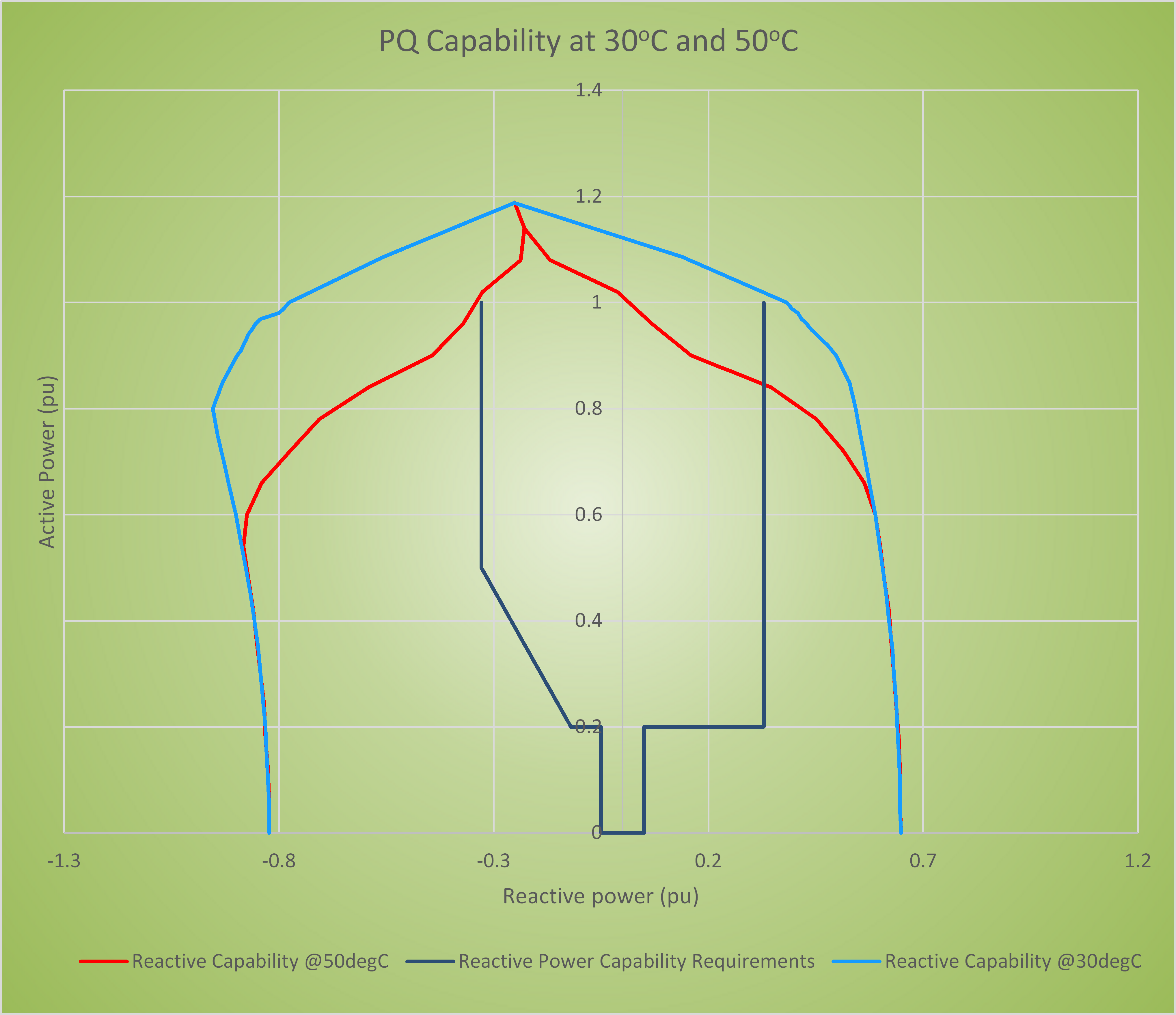
PQ capability at 30 degrees Celsius and 50 degrees Celsius compared against the reactive power requirement
Example project comparison showing how PQ capability can tighten as ambient temperature rises.

Why temperature matters

One of the most overlooked risks in G99 studies is the effect of temperature on both inverter capability and transformer rating. Reactive power capability is often assessed primarily against the grid code requirement at the connection point, with the understandable focus on demonstrating compliance.

What can be underestimated during early project development is how strongly ambient temperature can influence the actual capability available from the plant. It is not a passive background assumption. It can directly affect both inverter reactive power capability and the thermal rating of key plant equipment, particularly inverter transformers.

Capability is set by the full plant

Reactive power capability is not determined by one item of equipment in isolation. It depends on how the overall plant performs as a system, including inverter capability, transformer thermal rating, internal network losses, voltage profile, and the margin available within the design.

Where temperature has not been considered properly, a site may appear to have sufficient reactive capability on paper, but the available headroom can reduce under more onerous operating conditions. In practice, that can affect compliance, export capability, or the wider electrical design of the plant.

Why identifying this early matters

The benefit of identifying this early is that the project team still has practical options available. Those decisions are far better made during project development, when there is still flexibility in the design, than later when procurement and detailed design have already progressed.

Early awareness lets the team treat the study as a design tool rather than a late-stage constraint, which is usually where the biggest programme and cost savings are made.

Typical early-stage responses

  • Select equipment with better thermal performance.
  • Increase inverter numbers where appropriate.
  • Increase transformer MVA rating or adopt enhanced cooling arrangements.
  • Review tap position strategy and site voltage profile early.
  • Reduce internal electrical losses so less reactive capability is lost before the connection point.
  • Add reactive compensation equipment where appropriate.
  • Where needed, reassess the TEC or export capacity of the plant.

More than a compliance exercise

At RenSolv, we see G99 load flow and reactive power compliance studies as more than a compliance exercise. When carried out properly and early enough, they can identify technical limitations that may otherwise only become visible later in the design, when changes are more difficult and more costly to implement.

If you are developing a solar, BESS, or co-located project and would like to discuss reactive power capability, plant thermal limitations, or wider G99 compliance studies, please get in touch.