G99 Studies

EREC G99 Type C and D Compliance Studies

At RenSolv, we specialise in ENA Engineering Recommendation (EREC) G99 compliance assessment studies and power system dynamic simulation for renewable, conventional, and energy storage projects. Our team has over 15 years of experience delivering grid compliance and power system analysis studies for solar, wind, battery storage (BESS), conventional generation, and co-located energy projects.

EREC G99 is the UK standard that applies to the connection of generation equipment in parallel with public distribution networks on or after 27 April 2019. Our engineers have been performing G99 studies since its launch, supporting developers and asset owners with high-quality technical submissions that Distribution Network Operators (DNOs) can review efficiently.

RenSolv engineers have delivered G99 and Grid Code compliance studies for renewable and energy storage projects connecting to both transmission and distribution networks across the UK, as well as in international markets.

What a G99 Type C and D study involves (and why it matters)

For Type C and Type D projects, including solar, wind and BESS, G99 compliance fundamentally requires proving that the Power Generating Module can:

  • Meet reactive power capability and voltage control / reactive power stability requirements.
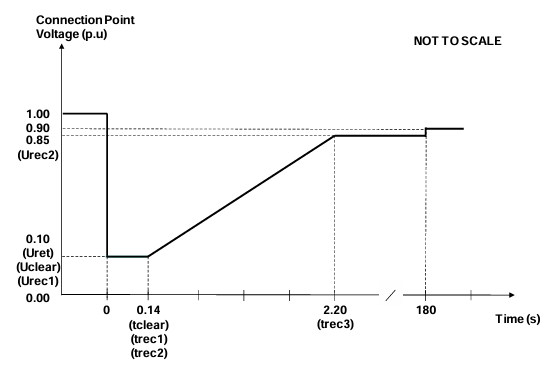
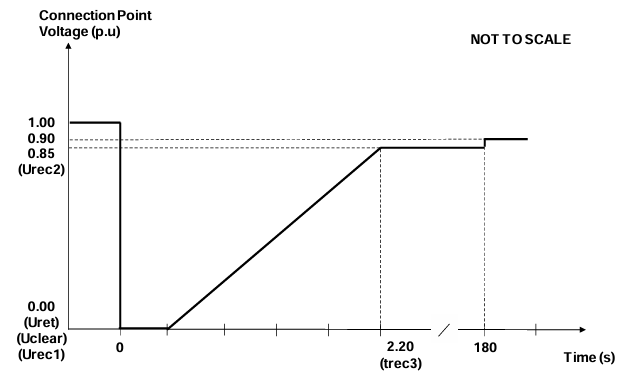
  • Remain connected and stable during network disturbances through fault ride-through for retained voltages shown in the figures below.
  • Provide fast fault current injection, reactive current support, during low voltage events.
  • Respond appropriately to changes in system frequency from the nominal 50 Hz.

These capabilities are not optional and they are the core behaviours that demonstrate compliance with the relevant Type C and D requirements stated in Section 13 of EREC G99.

In practice, the study begins by collecting the relevant project and network data, building the network representation in an industry-standard power system software environment, and then executing the required simulation assessments to confirm compliance against Section 13 requirements.

Typical G99 simulation assessments for Type C and D projects

Based on our experience across solar, wind, storage, and hybrid assets, a Type C and D G99 programme typically requires evidence across the following technical areas, referenced in Section 13:

  • Frequency response capability, including operation during LFSM-O, LFSM-U, and FSM modes.
  • Fault ride-through capability for the applicable connection voltage class, aligned to Section 13.3 requirements.
  • Voltage control and reactive power stability aligned to Section 13.4 requirements.
  • Reactive power capability aligned to Section 13.5 requirements, including capability expectations at the Connection Point.
  • Fast fault current injection aligned to Section 13.6 requirements for Power Park Modules.
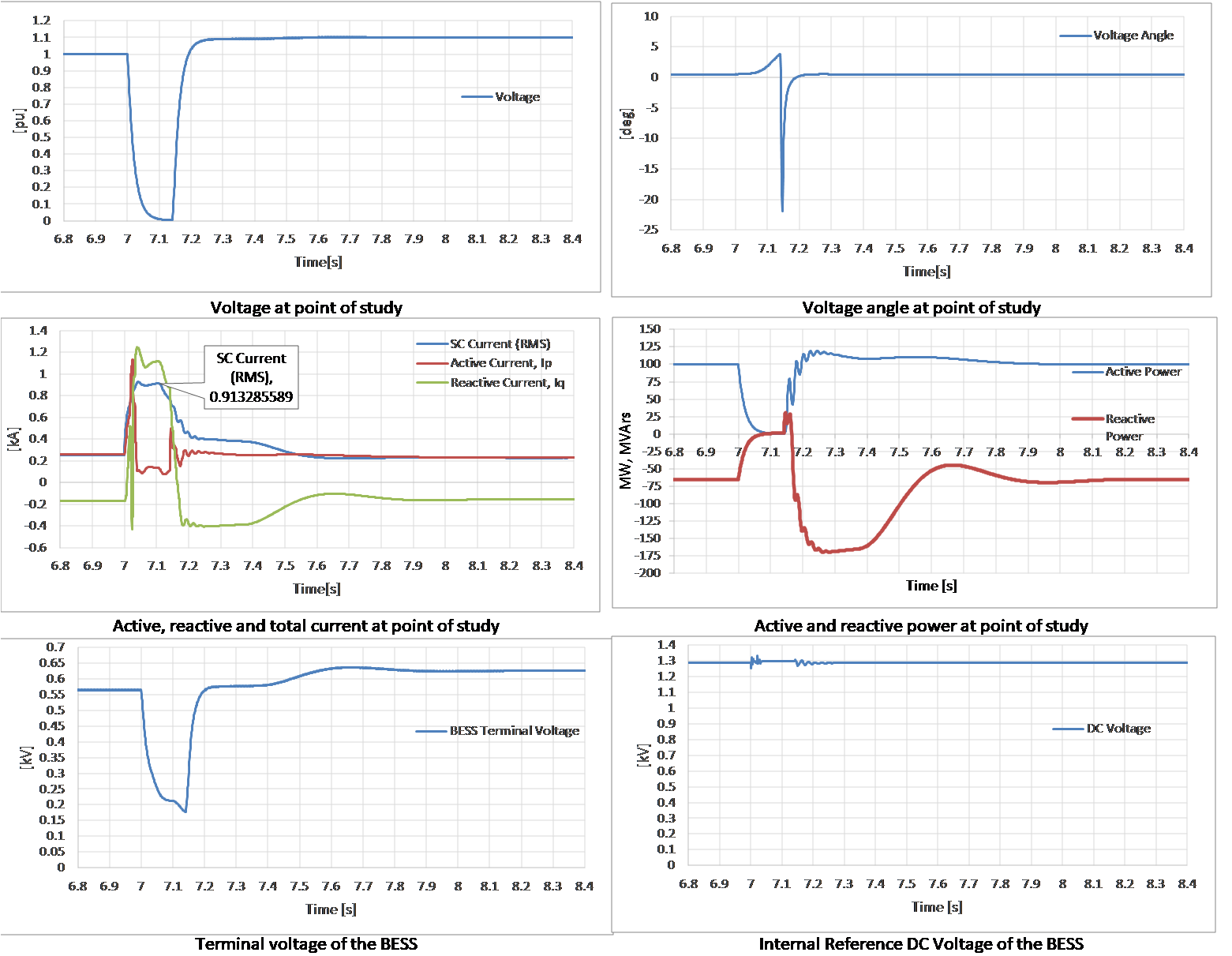
Example dynamic simulation of grid-forming BESS response to a transmission fault
Figure 1: Example dynamic simulation of grid-forming BESS response to a transmission fault (275 kV connection).
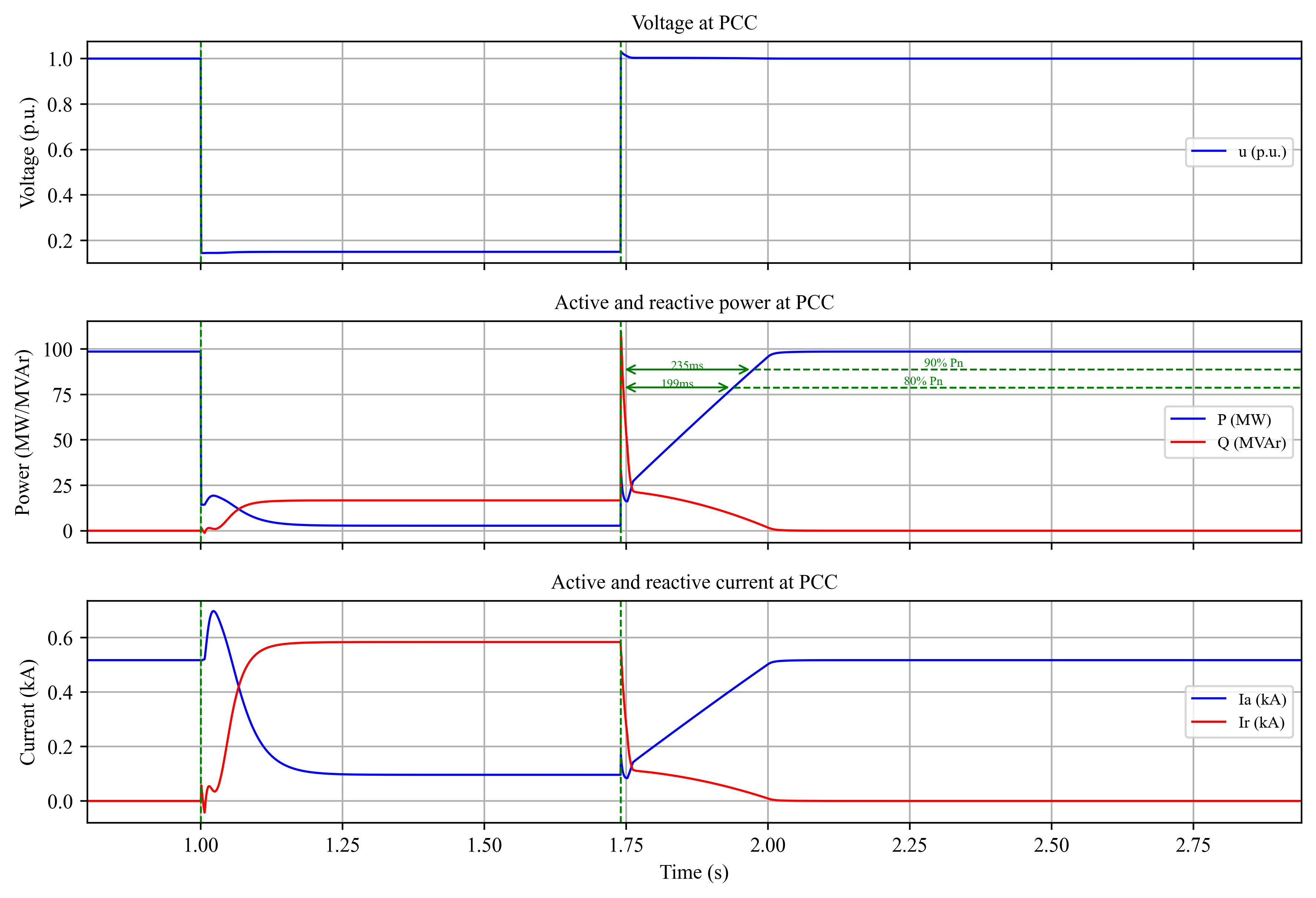
Example fault ride-through simulation
Figure 2: Example fault-ride through simulation.

How we work with clients

We keep our clients informed throughout the full study programme. If a potential non-compliance is identified, we raise it early. This saves time, avoids unnecessary iteration, and gives the project team a fair opportunity to resolve issues before documentation is formalised.

This is especially important for Type C and D projects, where control settings, plant capability limits, and network conditions can materially affect compliance. Early technical clarity reduces late-stage change, commercial risk, and programme delays.

Where non-compliances are identified, we proactively propose mitigation measures and engage with equipment manufacturers where necessary to identify practical solutions that restore compliance.

Applicable voltage-time envelopes

Voltage versus time curve for Type C and D power generating modules below 110 kV
Figure 3: Voltage vs time curve for Type C and D PPMs connecting below 110 kV, taken from EREC G99.
Voltage versus time curve for Type D power generating modules at or above 110 kV
Figure 4: Voltage vs time curve for Type D PPMs connecting at or above 110 kV, taken from EREC G99.

What you receive from RenSolv

RenSolv delivers professionally prepared technical reports authored by specialist power system engineers with extensive experience in grid compliance and power system simulation studies.

Our reports provide a clear and structured technical submission for both the client and the relevant DNO. Each study presents the required simulation assessments and demonstrates compliance against the applicable limits and requirements defined in EREC G99 and aligned with the information typically expected by network operators during compliance reviews.

Typical Projects We Support

RenSolv provides G99 compliance assessment studies for a wide range of generation and storage developments, including:

  • Utility-scale solar farms.
  • Onshore and offshore wind projects.
  • Battery energy storage systems (BESS).
  • Hybrid renewable projects, solar plus storage / wind plus storage.
  • Co-located generation and storage developments.
  • Data centres.

Our studies support projects connecting at distribution voltages including 11 kV, 33 kV, 66 kV and 132 kV.

Project Reference

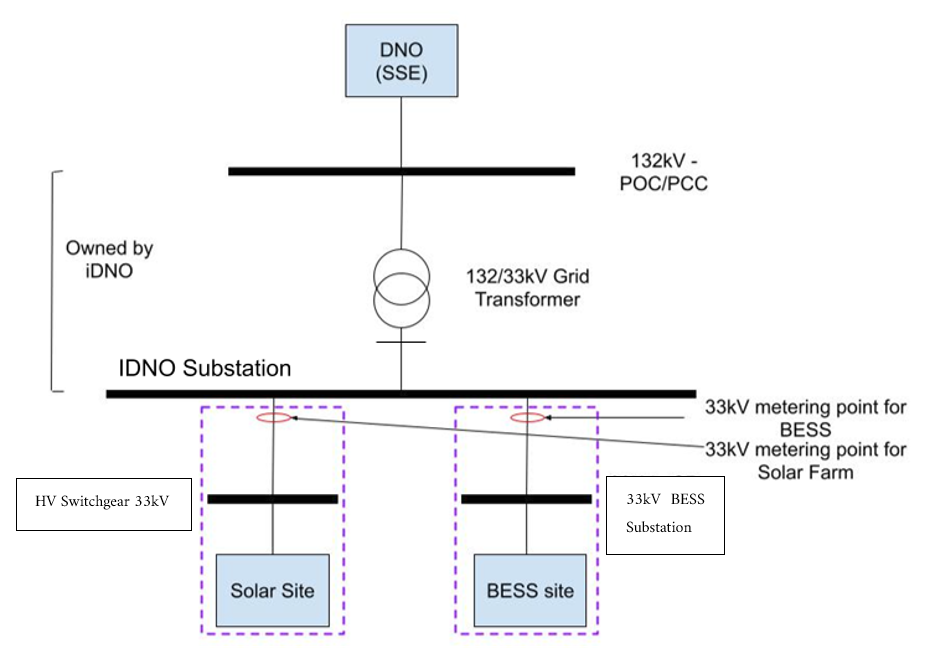
As a recent example, RenSolv performed a G99 compliance assessment study for a 42.7 MW registered export solar farm co-located with a 10 MW import capacity BESS, connected at 33 kV to an independent DNO (iDNO). The iDNO network in turn connects to the main distribution network at 132 kV.

The study assessed the key compliance criteria aligned with Section 13 of EREC G99, including frequency response behaviour, fault ride-through capability, voltage control performance, reactive power capability, and fast fault current injection.

Dynamic simulation studies were carried out to demonstrate whether the project met the relevant compliance requirements. The results confirmed that the project was compliant with the applicable G99 Type C requirements.

You can find further details about this project in our Reference Projects section.

Other Projects Supported by RenSolv

RenSolv engineers have supported renewable generation and energy storage projects across the UK transmission and distribution networks.

Schematic of an example project involving solar farm and BESS connected to an IDNO substation
Figure 5: Schematic of an example project involving solar farm and BESS connected to an IDNO substation.

Why Choose RenSolv

Deep technical capability with real project experience

We bring specialist power systems expertise backed by years of industry experience delivering G99 compliance assessments for real projects. Our studies are technically robust and aligned with the requirements of EREC G99 and the expectations of DNOs, helping minimise unnecessary review iterations during the compliance process.

A practical and collaborative working approach

We work closely with developers, consultants, and equipment manufacturers to ensure potential compliance issues are identified and addressed early. Our approach is supportive, transparent, and focused on building long-term working relationships with our clients.

Support through to project energisation

Where required, we attend technical meetings with project teams and network operators to support the project through to energisation. Our involvement extends beyond preparing technical studies, as we also support the project team in addressing technical queries and ensuring the G99 compliance process progresses smoothly.

Discuss your G99 compliance requirements or an upcoming project with RenSolv Specialist Engineer today.

Book your Free 30-Min Consultation Today.

Book your Free 30-Min Consultation Today